June 3, 2026

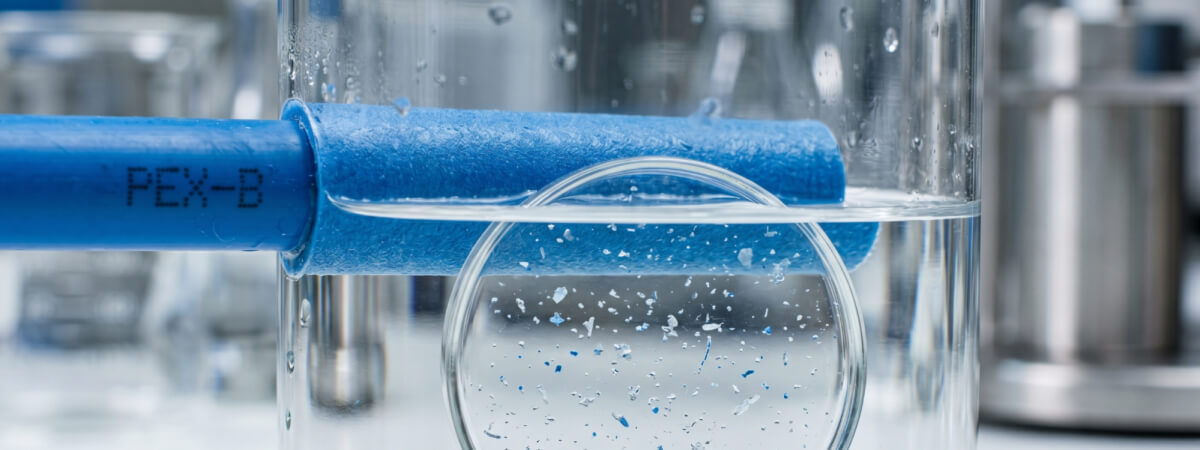
If you’re thinking about repiping your home with PEX, there is one important fact you should understand first: PEX is plastic.
That matters because more homeowners are starting to ask a simple question: “If plastic is carrying my drinking water, what could end up in that water over time?” That’s where the conversation around microplastics and PEX begins.
PEX is often sold as a modern, easy solution for repiping. But many homeowners are never told the full story.
Research has raised concerns that plastic plumbing materials can:
That does not mean every PEX system will fail or instantly contaminate water. But it does mean PEX should not be treated like a risk-free option.
Microplastics are tiny pieces of plastic. They can form when plastic materials break down, crack, wear out, or are exposed to stress over time.
For homeowners, the concern is simple: If your plumbing system is made of plastic, could some of that plastic end up in your water? The answer to that is becoming harder to ignore.
Recent research has found microplastics in human tissue, which has made many people more cautious about everyday plastic exposure. That does not prove PEX causes disease. But it does raise the stakes. When it comes to the water your family drinks, cooks with, and bathes in, homeowners have every right to be careful.
A lot of repipe companies talk about PEX like it is just a construction material. But that misses the point. Your plumbing is not tucked away in a vacuum. It directly affects the water coming out of your kitchen sink, shower, and refrigerator.
So when a company recommends a whole-house PEX repipe, they are not just recommending a pipe material. They are recommending that plastic become part of your drinking water system. That is a much bigger decision than most homeowners realize.
One of the biggest concerns with PEX is chemical leaching.
Studies have found that new PEX pipes can release compounds into drinking water, especially early on (like overnight). Researchers have also found that when water sits in the pipes for longer periods, more chemicals can move from the pipe into the water.
In other words, the longer water stays in contact with the pipe, the more opportunity there is for things to leach out.
That matters in real life because water often sits in household plumbing overnight, while you are at work, or while you are away from home.
Research has also shown that different PEX brands can behave differently. That means homeowners are often being asked to trust a product category that is not always consistent from one manufacturer to the next.
Chemical leaching is only part of the concern. The other issue is physical breakdown.
PEX is made from polyethylene, which is a plastic polymer. Research on aging plastic water pipes has raised concerns that polyethylene-based pipe materials can crack, peel, and create tiny plastic particles over time.
That is where the microplastics issue comes in.
Homeowners should ask themselves: “Do I really want my water flowing through plastic for the next 10, 15, or 20 years while researchers are still trying to understand the long-term effects of microplastic exposure?”
That’s not fearmongering. That’s just common sense.
For many homeowners, the biggest red flag is not one single study. It is the fact that there are still so many open questions.
Questions like:
When you are making a major decision about your home, “we still need more research” is not a comforting answer.
PEX is often sold on speed, cost, and convenience.
That is why many homeowners hear things like:
But homeowners should be careful with simple sales language.
A product can be widely used and still have downsides. A product can be certified and still raise long-term concerns. A product can be cheaper to install, and still be the wrong choice for someone who cares about water quality.
That is why the real question is not: “Is PEX popular?”
The real question is: “Am I comfortable with plastic carrying my family’s water every day?”
Homeowners should also know that PEX has not been free from legal problems.
There have been class-action lawsuits involving PEX products and related plumbing components, with allegations that certain systems were defective and led to leaks or property damage.
That does not mean every PEX system will fail. But it does show that homeowners are not overreacting for being skeptical.
When you combine leak concerns with chemical concerns and microplastic concerns, it becomes much harder to call PEX a simple, no-brainer solution.
Before signing any repipe contract, ask these questions:
If the answers are vague, rushed, or dismissive, that is a warning sign.
PEX may be marketed as an easy repipe option. But easy does not always mean smart.
Homeowners should know that PEX is a plastic plumbing material tied to real concerns about chemical leaching, water quality, and possible microplastic leaching.
And when it comes to the water inside your home, “maybe okay” is not good enough.
If you are choosing a material that will carry your family’s water for years, you should ask harder questions, look past the sales pitch, and think carefully before committing to plastic.
Consider flushing before use, if water has sat in your PEX pipes overnight or longer. And if you’re reconsidering using PEX due to these concerns, then perhaps installing a water filter system can be your ideal solution. Click here to learn more.

The GreenSky® Programs make it easy for contractors to offer affordable financing to customers like you. GreenSky is the servicer for one of the nation’s largest bank lending programs. Banks in the GreenSky® Programs have financed more than one million home improvement projects. You can think of GreenSky as a link between contractors, their customers and banks. We bring everyone together and simplify the loan process, from application to decision/approval to payments.
Yes. Studies have found that PEX can release chemicals into drinking water, especially when the pipes are new or when water sits in them for long periods.
Yes. That is an active area of concern. Since PEX is a form of plastic, and plastic pipes can degrade over time, many tiny plastic particles can end up in the water.
That is too simple of a claim. PEX may meet certain standards, but research has still raised valid questions about chemical leaching, long-term aging, and plastic exposure.
Because it is not just a pipe choice. It is a water-quality choice. Homeowners want to know what their water is touching before it comes out of the tap.
Absolutely. A repipe is a major investment, and homeowners should understand the long-term tradeoffs before agreeing to put plastic throughout the home.
Consider flushing before use, if water has sat in your PEX pipes overnight or longer. And if you’re reconsidering using PEX due to these concerns, then perhaps installing a water filter system can be your ideal solution. Click here to learn more.